
The complete guide
A Buyer's Guide to Foldable Golf Alignment Sticks
When your setup is hard to judge
It can be difficult to tell where you are aiming when you are standing over a golf ball. Your feet may feel square even when they point somewhere else. Ball position can also be hard to compare from one practice session to the next.
Golf alignment sticks provide a physical reference that you can place beside your setup. They do not assess your technique or choose a target for you. Their role is simpler: they give you a line to look at while you work through a drill.
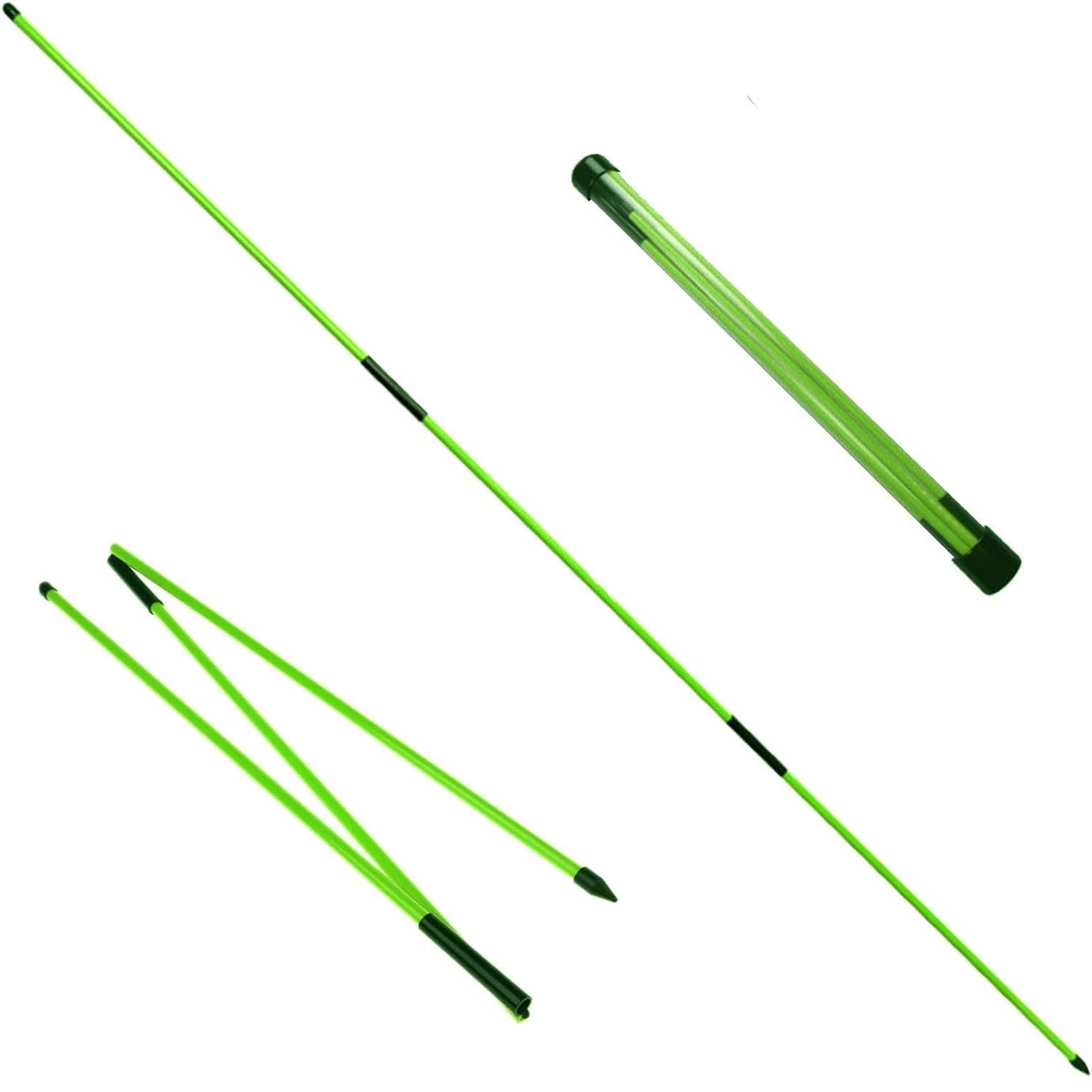
This set contains two folding rods. Each has three connected sections, and the pair comes with a clear storage tube. It is worth looking closely at that format, the listed measurements and your intended use before deciding whether it belongs in your bag.
What this set contains
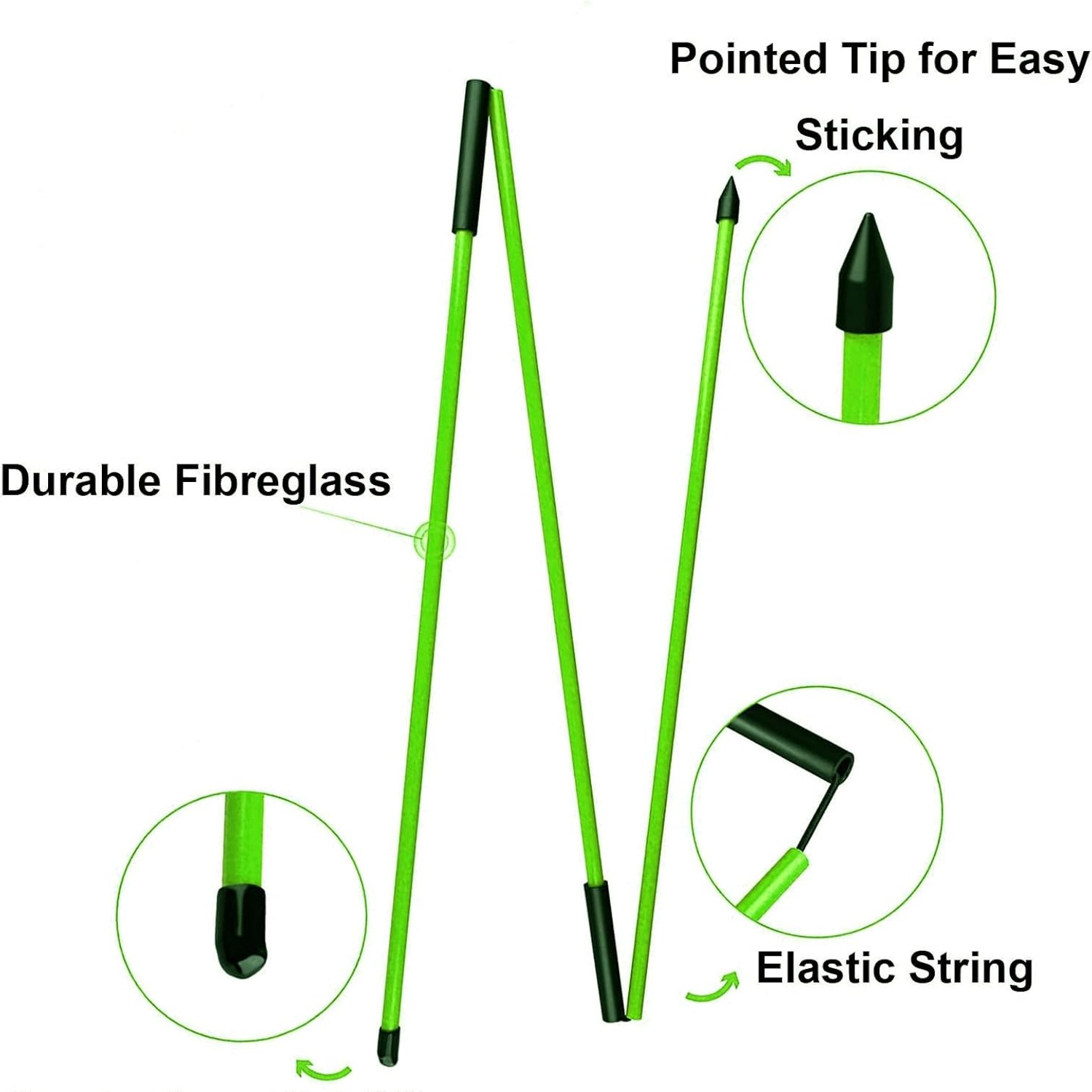
The main items are two fiberglass alignment rods. Each rod separates into three sections linked by elastic rope. The sections stay attached when folded, so you are not packing away six loose pieces.
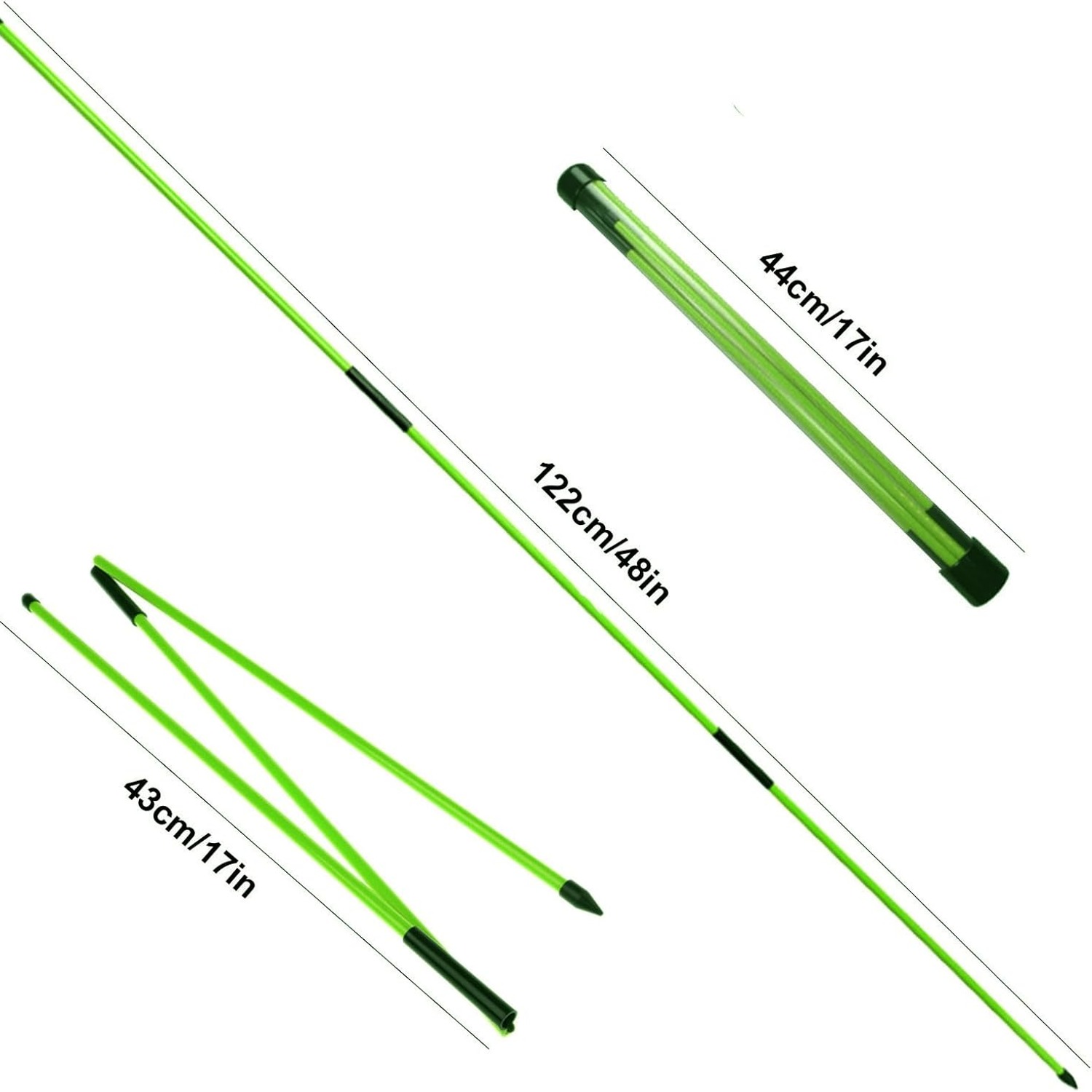
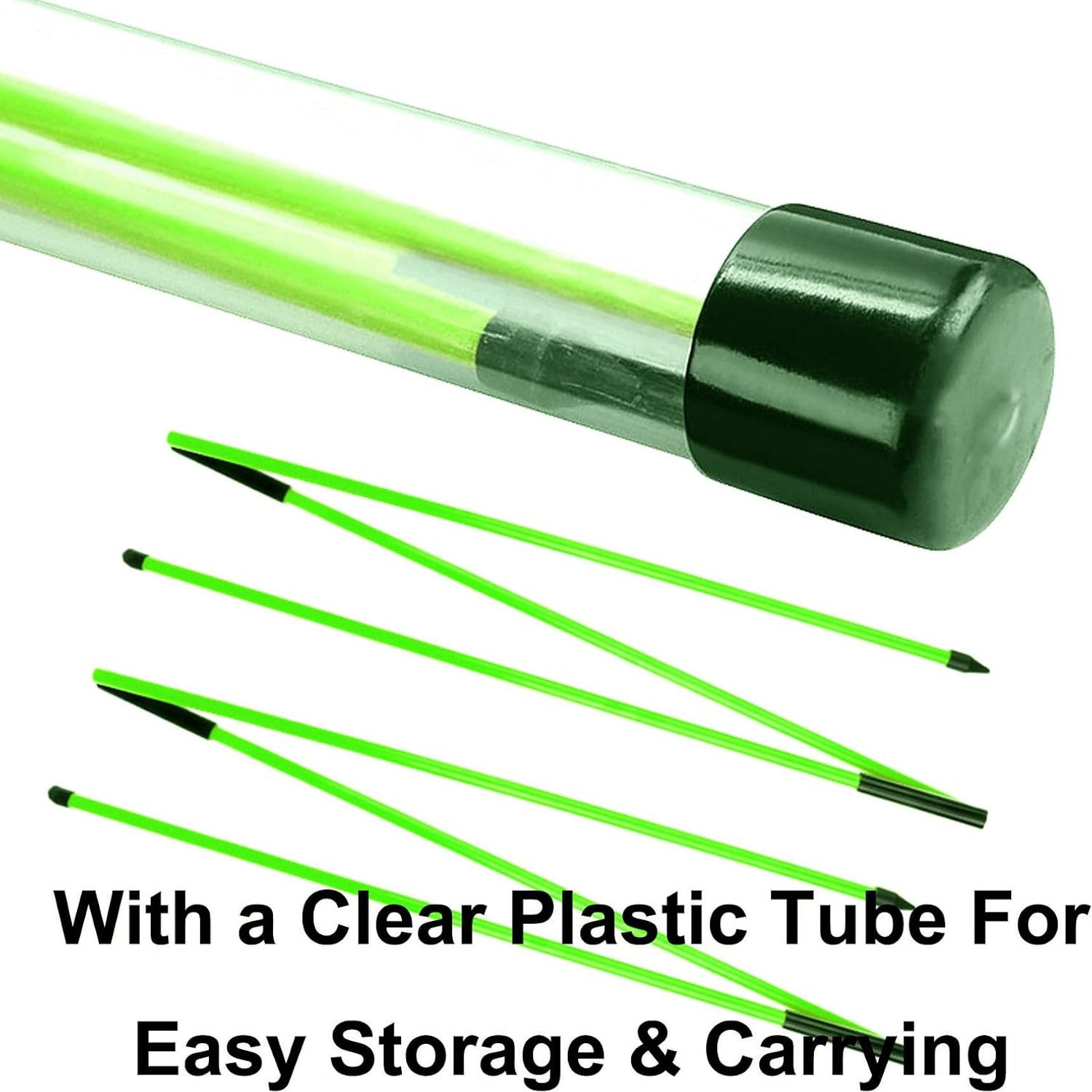
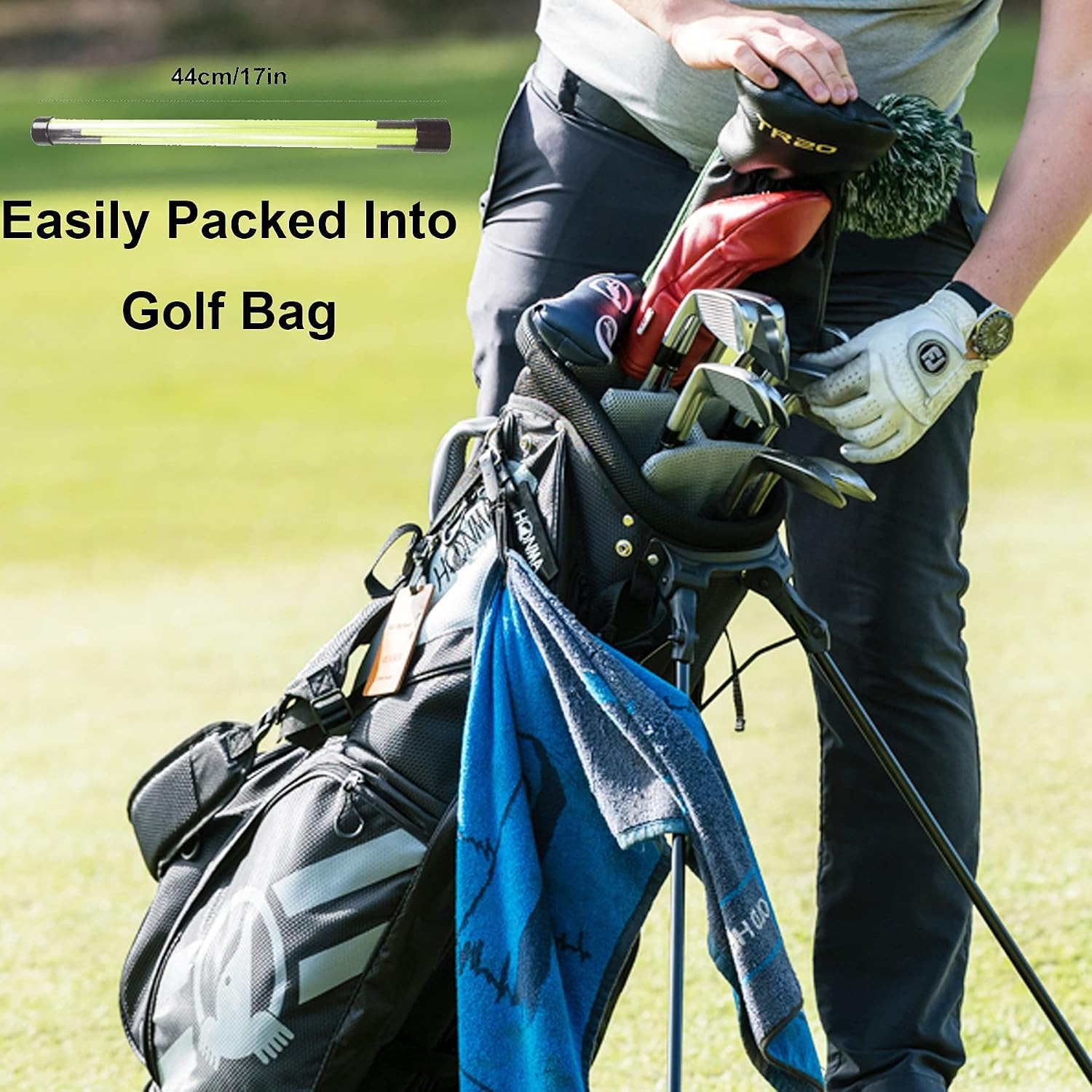
The maker's description also describes a clear tube for storage. Its stated length is 18 inches. The tube diameter is not given, which matters if you intend to put it into a narrow pocket or a particular compartment in your golf bag.
Each rod has a pointed tip at one end and a rubber cap at the other. The pointed tip is described for ground placement. The cap is described as helping to keep dirt out of the opposite end. Do not assume that it is a cover for the point.
How alignment rods serve as references
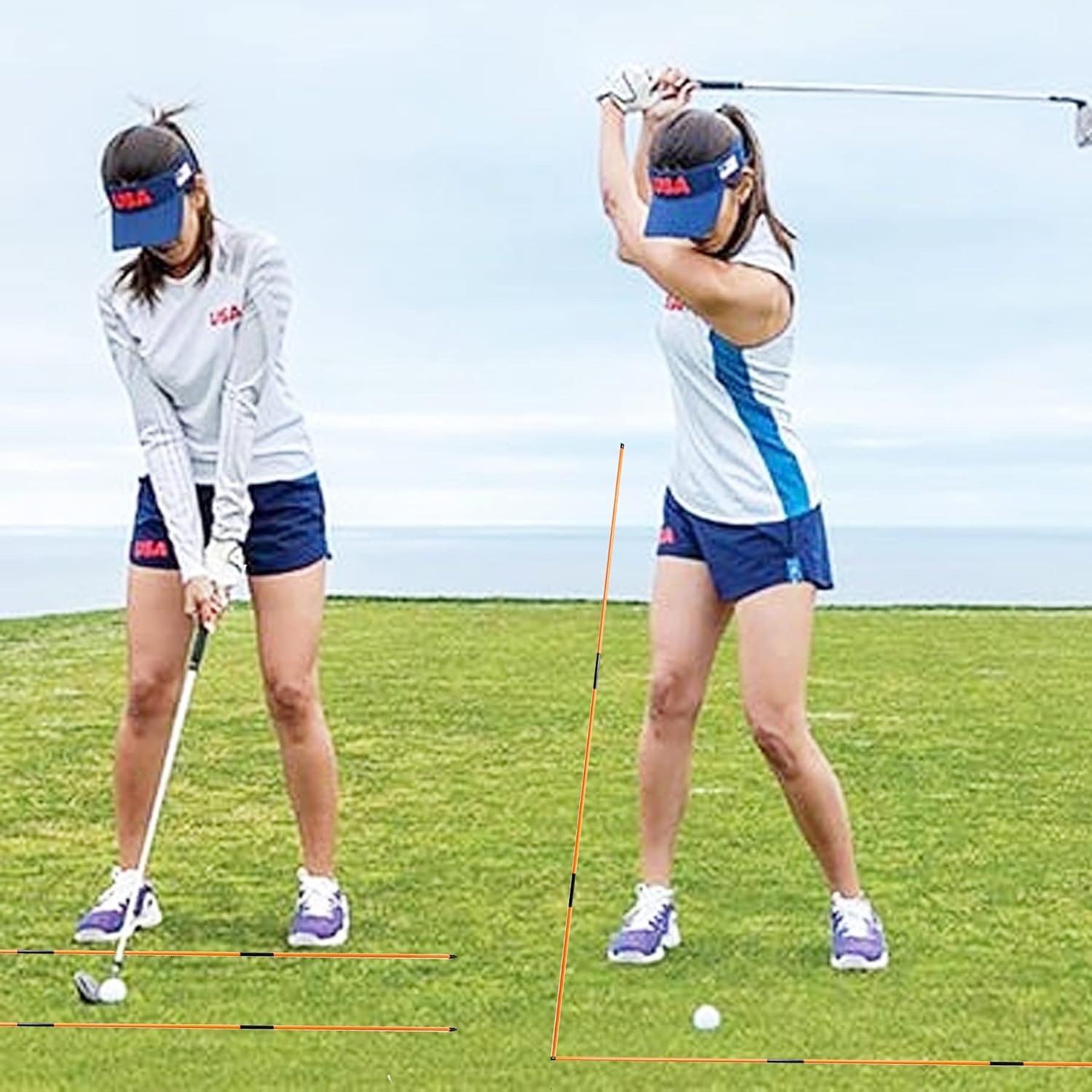
The value of a reference rod is that it stays visible while you check a position. Depending on the drill, it may help you compare your stance with a chosen line or see where the ball sits relative to your feet.
With two rods, you can lay out more than one reference. A coach might ask you to use one beside a target line and another to mark a separate part of the setup. The correct arrangement depends on the lesson, so avoid treating any single layout as a rule for every shot.
These golf setup aids do not supply measurements or feedback. You still need to observe what you are doing, or ask someone to check it. Think of the rods as markers within a practice plan, not as a replacement for one.
Who the folding format may suit
Foldable golf alignment sticks are worth considering if you want rods that can be packed into shorter sections. This set is described for storage in a golf bag, with the tube keeping the folded pair together between sessions.
That can suit a golfer who takes practice equipment to a range rather than leaving it in one place. Before buying, though, check the actual space in your bag. A folding design does not guarantee that every pocket will accommodate the supplied tube.
The maker mentions beginners, but it does not set an upper skill limit. The more useful question is whether you have a clear purpose for the rods. If a lesson or practice routine calls for visible alignment references, the format is relevant regardless of how long you have played.
Check the length before ordering
There is a small difference between the measurements in the maker's description. The size product page states 122 cm, or approximately 48 inches. The separate dimensions field gives 121 x 0.8 x 0.8 cm.
Neither figure should be silently substituted for the other. For a general reference line, you may not need an exact length. For a specific drill, storage arrangement or comparison with equipment you already own, that difference may matter.
If exact sizing is important, ask for confirmation before ordering. The same care applies to the storage tube. Its 18-inch length is stated, but the maker does not give its width or the exact folded dimensions of each rod outside the tube.
Materials, colour and construction
The detail description names fiberglass as the rod material and Mint Green as the colour. It also describes elastic rope connecting the sections. These are the stated construction details for this golf alignment stick set.
The source description mentions several other colours, but that does not confirm that those choices are available on this page. If colour matters to you, check the option shown when ordering rather than relying on a general description.
No tested strength figure or weather rating is supplied. Although the description mentions sun and rain, it would be unwise to read that as a promise about indefinite outdoor storage. Handle the rods with care and inspect them as you would other practice equipment.
Choosing a useful first drill
Start with a clear question. You might want to check where your feet point, or make ball position easier to compare. Trying to review every part of your swing at once can make a simple practice tool harder to use.
Golf stance alignment sticks are most helpful when you know what line you are trying to create. Ask your coach to show you where the rods should sit for your chosen exercise. Take a moment to understand the layout before beginning.
The description also mentions shoulders, hips, club alignment and swing-plane work. Those uses require different setups. A rod position that makes sense for one check may not suit another, especially when the rod is raised rather than lying on the ground.
Leave room for the club and ball
Set up your practice space before taking a swing. Keep rods away from the intended club and ball path, and make sure you have room for the whole movement. A visible reference does not need to become something you try to strike.
Be especially careful with pointed ends and any drill that places a rod at an angle. If you have not been shown how to arrange that exercise, ask for guidance first. Do not copy a raised-rod setup without understanding its placement.
Practice facilities may also have rules about equipment on mats, grass or putting greens. Check before pushing a tip into the ground. Where staking is not allowed, choose a permitted drill instead of forcing the equipment into an unsuitable surface.
Building a repeatable practice routine
A useful routine does not need to be complicated. Choose the part of your setup you want to observe, place the rods according to the drill, then pause to check the arrangement before practising.
As you work, make sure the rods have not moved. An accidental shift can change the reference without you noticing. This is one reason to keep your focus on a single practice task rather than adding more markers simply because you have them.
If you are comparing golf practice rods with a more involved training device, consider what feedback you actually need. This pair offers physical reference lines. It does not record movement, diagnose a fault or tell you whether a shot met a target.
Packing and caring for the set
After practice, wipe away dirt with a soft damp cloth. Pay attention to the joints before folding the rods, since clean connections are easier to inspect. Let damp rods and the tube dry before putting everything away.
Separate the sections gently. The elastic links them together, but that is not a reason to pull hard on the cord or force a joint. Check for damage to the fiberglass, connections and elastic before the next session.
Pack the pointed ends with care and keep them away from children. No special cleaning product or detailed maintenance schedule is stated in the maker's description. A basic routine of cleaning, drying and checking the equipment is a sensible starting point.
Buying for yourself or as a gift
For your own use, compare this pair with the drills you already practise. Do you need two reference rods? Does the folding format suit your bag? Are you comfortable with the small difference between the two listed length figures?
As a gift, the set may suit someone who has asked for alignment sticks or is working with a coach. It is worth checking whether they already own a pair. Gift packaging and a personalised option are not specified.
Review the delivery information available when ordering. In Ireland, the supplied terms state a 14-day distance-sale cancellation right from delivery, with customer-paid return postage, alongside rights under the Consumer Rights Act 2022.
The short version
This is a two-pack of fiberglass golf training sticks with three elastic-linked sections per rod. A clear storage tube is included, and the rods have pointed tips with rubber caps at the opposite ends.
Choose them if that simple reference-and-storage format fits your practice. Confirm exact sizing if needed, use a drill you understand, and keep expectations tied to the equipment's actual role: providing visible lines while you practise.